


An atmosphere of building tension. I can see the frosty air exhaled by my competitors as they do the "starting line" shuffle on the start line.
A quick twitch of the hips.
I'm at my local Saturday morning race and I'm serious. Three, two, one...
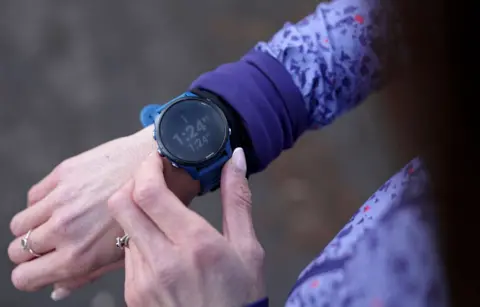
Hold on. I have to adjust my tracker. So does the guy alongside me.
The person waiting expresses impatience. I'm not moving until… done! Signal acquired, away I go.
In the mele, it's challenging to spot a wrist without a wearable on it. And it's not just us runners who use them.
We're witnessing a thriving, multi-billion dollar market. Companies like Apple Watch lead the market, featuring an broad selection of different versions to cater to a spectrum of lifestyles. Depending on how feature-packed the watch you select, price tags can range from an affordable sum to thousands of pounds.
"It drives me insane, I can't stop checking."
"It reassures me… It feels like a friend supporting me."
"Please don't notify me I've had a poor sleep."
Just some of the reactions I've received from other tracker enthusiasts when I question what they feel about theirs.
The Monitoring Conundrum
My current opinion on my own device? Currently, irritating. It's telling me I'm not hitting my target, leading me to doubt whether the trees I'm passing under are blocking my satellite signal.
Millions of us fasten these little monitors onto our arms and keep them on 24/7, seemingly at ease with the fact they're perpetually recording us.
A distant memory are the days when we depended on them only to give us an rough count of our pedometer reading. Currently, they can measure our nightly rest, blood pressure, glucose levels, our recovery score.
It's difficult to find a physical metric they don't track.
But are they able to do what they advertise? And are the statistics we analyse a faithful picture of our actual health? Do they improve our overall health, or do the plethora of readings and motivational messages just increase our everyday anxiety?

A Love-Hate Relationship
"I become a a little preoccupied with mine," a wearer reveals.
While she appreciates how her device records her workouts, she finds some of its other functions "daunting" at times - a feeling first discovered during a significant period.
Before she realised she could put it into a specific mode, her smartwatch kept telling her she was failing to be productive enough. In a new phase, the watch frequently reports her she's had a restless night.
"I am caring for a infant, I don't need to be informed I'm tired," she says. "I'm acutely aware only too well."
Is it not possible to just take it off?
"I could, theoretically, but I've got this complicated dynamic with it," she says. "I love it for its fitness insights, I just wonder whether the additional features it can now do is possibly excessive for me."
The Technology Behind the Tracking
Every device of smartwatch has its own proprietary way of tracking your vitals and analysing your data, but the majority use detectors on the underside of the watch.
They usually shine small, green LED lights onto your skin which can monitor capillary action, identifying your BPM. Sophisticated devices measure changes in the bioimpedance that runs through the skin to gauge your nervous system activity.
Expert Perspectives
One expert says that for most people for smartwatches, it's a "fine balance" - while the ever-evolving tech could potentially aid early diagnosis, "detecting disease before we notice anything", it could also turn us watch wearers into the "worried well".
He points out that the most advanced wearables can conduct tests like electrocardiograms (ECGs), which continuously monitor how stable the heart is. They can alert if someone is experiencing a heart arrhythmia, where there is erratic signals in the heart causing an irregular heartbeat.
This does not automatically signal someone is on the verge of a cardiac event, but it can give an early warning they might be more vulnerable of a blood clot in the long term.
But how to interpret these readings is complicated. The expert fears that as further capabilities are added, people may struggle to fully comprehend their data.
"I have some doubts that having the capacity to monitor so many metrics is such a positive development," he says.
A clinical psychologist studying wearable tech echoes this sentiment. Her work into the impact of wearable tech on a cohort of individuals with health issues suggested a significant portion of those who were given devices to monitor their heart health experienced greater stress and were "had a higher tendency to use medical services".
She observed a cycle with her patients - they saw a worrying figure on their watch. They grew concerned. Their BPM increased. They got more worried. They looked a second time, and their anxiety went up again.
"When people are presented with stats about ourselves that we can't properly interpret then, of course, we are going to want to know more," the psychologist says. "We look, we re-check - it becomes a self-fulfilling prophecy."


